
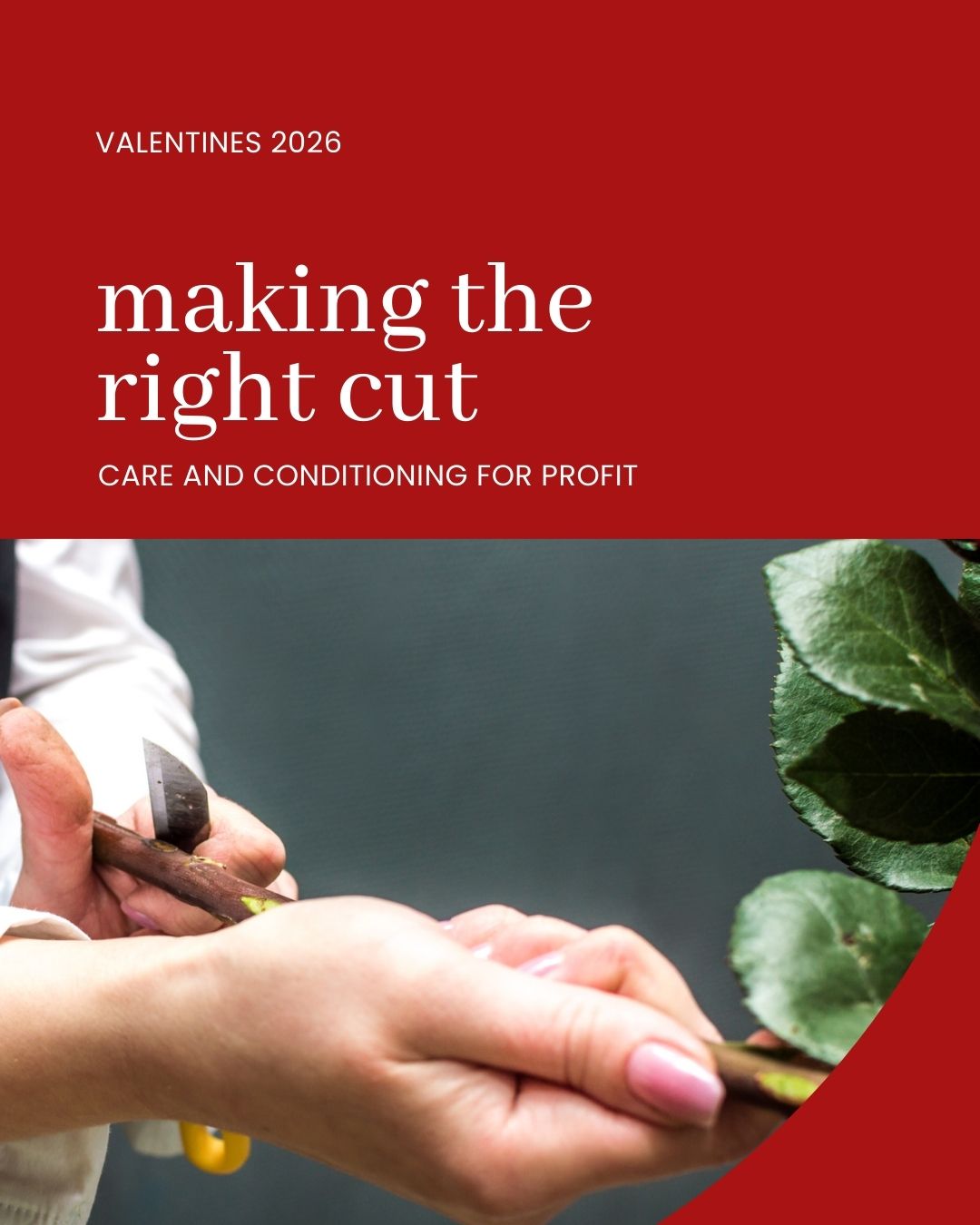
The first cut should be the deepest!
Most florists will admit that cutting and conditioning is not the most exciting job in the world. However, the way you strip roses can make a huge difference to both your productivity and profitability.
Do it wrong and you can either end up with damaged stems (which shortens life span, reduces customer satisfaction and increases wastage) or you’ll do yourself damage with sore hands and damaged fingers.
Now we have all three of the Oasis Floral Products strippers in our toolbox as they each do different things and we swear by our thick gloves.
And if you head over to our Facebook page (where there is another rather fine stripper!) there are loads of comments from other florists but general rule of thumb is that ALL flowers need to be cut and conditioned on arrival at the store and if you are sourcing roses from Colombia or Ecuador, they’ll need extra hydration time after their long journey.
So, whilst clean buckets and tools are a must, we’ve put together our Ten Top Tips on how to get the best out of your flowers to make the most money and easiest processing.
-
South American are shipped dry packed. Some wholesalers will stand in water but just to be sure when they arrive at the shop keep the cardboard collar on. You can slightly loosen it but do not remove it as it helps keep the flowers straight and absorb the maximum amount of water.
-
On all flowers remove any foliage that will sit beneath the water line and cut 3ms off the stems at a sharp angle. NEVER EVER use blunt scissors or bash the stems as this will destroy the capillary structure of the stem and reduce water take up.
-
De-thorn roses by nipping off the tips of the thorns or use a purpose made stripper likes the ones from Oasis. Avoid ripping the stem or exposing naked stem flesh as this will allow harmful bacteria to seep in and cause infection.
-
Immediately place cut stems in at least 15cms of clean, fresh and flower food treated water
-
Only use Level 2 flower food in the shop/prior to delivery and make sure you use the right amount … too much or too little can kill.
-
Roses from South America should be stood in a dark, cool place, or chiller for as long as possible - 24 hours is ideal - to allow them to fully hydrate.
-
Once hydrated, remove the cardboard collar and ideally recut.
-
Dutch grown (as against Dutch sourced) won’t need quite as long hydration time but still need a good drink.
-
After their initial drink pre-bunch roses in 12’s (tie loosely with string) so you can just grab and arrange at speed.
-
Only remove the guard petals at the point of making up … they are there to protect the head so should be left on as long as possible.



.
 |
 |
 |