
Church calls for block on imports and foam
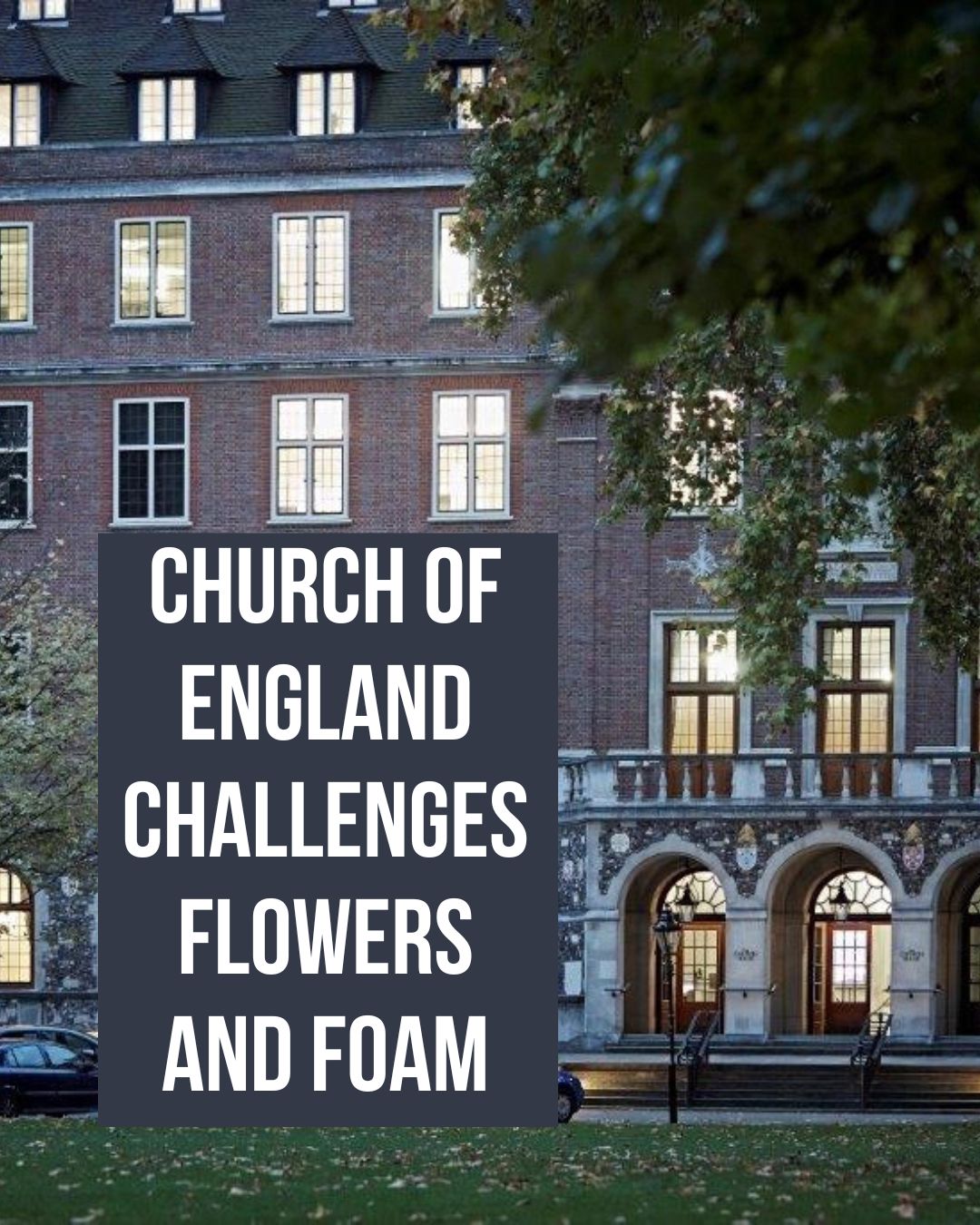
In a motion to be presented at the Church of England Synod on February 12th, representatives of church regions around the UK will be asked to discourage the use of imported flowers and eliminate foam from within churches, cathedrals and churchyards.
First suggested in 2022, the revised 2026 recommendations have been highly publicised through several articles in mainstream newspapers although there appears to be no official press release on the Church of England’s press portal.
The motion has been led by the Sustainable Church Flowers (SCF) movement, which was founded in 2019 by Candy Connolly, wife of Shane Connolly who holds the Royal Warrant of Appointment to both HM The King and HM The Queen.
It will be presented by SCF patron, Bishop of Dudley, The Rt Revd Martin Gorick and asks that the Synod
a) embrace the principles of the Sustainable Church Flowers movement which encourages a living into the Fifth Mark of Mission by promoting the use of local, seasonal and fully biodegradable/compostable flowers and foliage.
b) encourage cathedrals, churches and churchyards - wherever possible - to source flowers and foliage locally and seasonally for use in worship and church life
c) call on cathedrals, churches and churchyards to eliminate the use of floral foam (oasis) and all similar non-biodegradable and non-reusable products and techniques, while rediscovering traditional and environmentally friendly methods of presentation and display.
However, whilst nobody underestimates the need for best practice working methods, the motion has been met with deep concern by many in the flower industry.
Not just because the accompanying evidence seems flawed and, in some cases, is inaccurate but because no effort has been made to contact the industry at large and attempts to achieve any meaningful dialogue with the Church of England has been difficult.
In addition, not only would the suggested plans put huge pressure on dioceses and volunteers to implement but the information errors indicate a lack of industry knowledge or willingness to accept that there are already vast changes happening in the flower industry.
Something Jamie Grant, Director at the British Florist Association (BFA) told The Times when they contacted BFA for comment. “While alternatives do exist and are already being adopted in many settings, they are not universally practical or accessible for every design or florist. The BFA is actively engaged in researching viable alternatives, working with manufacturers and florists.”
There is no doubt that sustainability is an extremely important subject, and why so much time, money and effort is being spent within the industry to adapt and improve every stage of the flower chain with many proven positive results.
However, as the motion stands, if successful, it could cause a ripple effect that would have a huge impact on a vast number of people around the world and why it would be disappointing if the Synod supported it without really engaging with all parts of the industry or understanding the consequences of their actions.
The BFA have released a statement to give their industry perspective whilst Smithers Oasis will be issuing their own statement early next week. Meanwhile Florist Magazine will be discussing the subject via our social channels from Sunday so everyone has time to digest and think about the implications.
However, if you are a funeral director, event, wedding or funeral florist, parishioner or church flower volunteer and are worried about the motion and proposed actions, the best thing to do is write to your local Bishop or church representatives to outline your concerns as the decision to carry, or not, the motion will rest with them.


.
 |
 |
 |